We're very happy to be back in 2025 even if the vagaries of half-term dates in Bristol mean that we have moved into November. We've a very mixed bag of delights on offer; I've been scratching my head trying to find some over-arching theme, but without success. What you may notice is that three out of the four classes are City Clickers members or ex-members passing on material that they've gained in over forty years of learning and performing these dances. You may also be surprised to see that someone who you may know as a musician is co-leading one of these classes.
We regret that we have had to raise the class price a little as our hall costs have risen significantly.
To offset the hardship, however, we are pleased to announce that, with funding from the Instep Research Team a significant reduction in price can be offered to young dancers and those in full-time education
We are pleased that Simon Brock will be with us this year.
The workshop fee will include tea, coffee and biscuits which will be provided during the day. In addition we will be providing our highly acclaimed light lunches consisting of a choice of vegetarian soups, bread, fruit and home-made cakes for a modest fee of £10.00 which must be booked and paid for at the same time as your workshop place. We always offer vegan and gluten free options but if you have any specific dietary requirements please let us know.
Places for the workshops will be limited to ensure that all attendees get the best value for their money - so you are advised to book early. You can book by selecting the workshop(s) you are interested in and filling in the names of the attendees. When you have selected all of your places then submit your reservation. We will send you our bank details and would ask you to pay us by bank transfer.
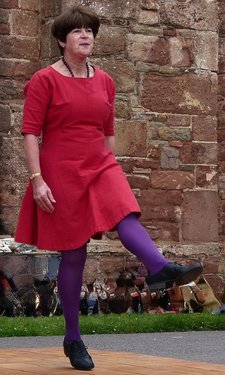
Julie has been a keen dancer for most of her life and is a founder member of City Clickers Clog and Step Dance group, along with Penny Jane Sheard. She is still a member of City Clickers, and although recently retired from performing, remains an active member of the group, teaching and advising. She is also a member of Instep Research Team.
She danced with Reading Cloggies during the early 1980’s and was greatly influenced by dancers such as Ian Dunmur, Ann-Marie Hulme, Jennifer Millest and Sammy Bell. From Sammy, she learnt two dances, a waltz and a hornpipe. In the past, she has taught these steps at Reading Cloggies Day of Dance, at Lancashire Wallopers Weekend and City Clickers’ own day of workshops, but not in recent years, so is pleased to be able to pass them on again.
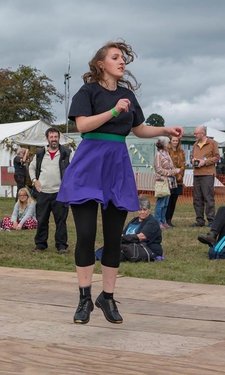
Sioned was first introduced to clogging when she was a member of NYFTE (National Youth Folk Troupe of England) by City Clickers’ own Vicky Cooper. .
The youngest member of City Clickers, she is now familiar with a range of styles from Lakeland to Welsh clog, can be seen performing regularly with the team and is now responsible for programming our performances.
Sioned is looking forward to sharing the team’s passion for traditional clog dancing with her peers and generations beyond that!
Julie and Sioned will be teaching five exhibition hornpipe steps of Sammy Bell who was a champion clog dancer in the 1930s, winning the Northumbrian clog contests three years in a row. He was taught at one time by Johnson Ellwood, who also taught Alex Woodcock. Sammy and his four brothers were Variety Hall performers who did amazing stunts and acrobatics in their shows as well as clog dance routines.
This set of hornpipe steps was the routine that Sammy would have danced on a pedestal (similar to the old miners’ pit props) to show off his prowess, and it is likely that he would have danced them for the championships as well.
Julie first met Sammy when they were both members of the Reading Traditional Step Dance and Clog Group in the early 1980s. He taught this set of hornpipe steps as well as his waltz steps from his championship days. Neither set of steps is well known and few dancers perform them, so it is good to be able to pass them on to others to dance.
There are six steps in the sequence and each step is danced on one foot only, but they will be taught off both sides in the workshop. There are a lot of beats and steps in this routine and each step has a different break, so there is quite a lot to learn, but they should not be beyond the reach of any competent intermediate level clog dancer.
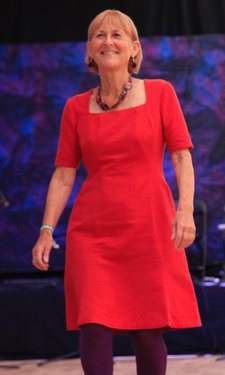
Penny Jane Sheard is an experienced dancer and teacher of step and step clog. She began her clog career with Carnkie Cloggers and Dandy Clog in Cornwall. When she moved to Wales she regularly taught and danced with Cobblers Awl in Cardiff and was a founder member and teacher of City Clickers clog and step dance group in Bristol.
She now dances with Dukes Dandy in Retford in Nottinghamshire, with Barbara Wigg as Cheeky Feet, and with the Cornish dance group Hevva, where she now lives again. Penny Jane travels for her art!
A chance for dancers to ‘step-up’ from beginner level and learn just five steps from the lovely waltz routine of Alex Woodcock from Northumberland. The steps follow the typical pattern of clog routines – platform/step unit/ finish. When performing (usually twelve steps) Alex used lots of lazy shuffles throughout the set. As these are incorporated into each step you will have plenty of practise in mastering the extra beats.
The steps are usually danced off each side. Take them away, re-arrange them as you wish and create your own performance, with or without the extra beats. Enjoy the dance….just as Alex did.
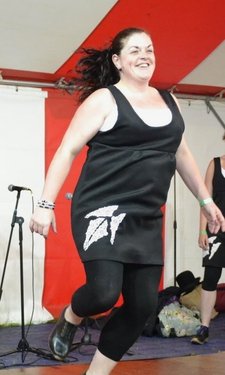
Vikki was introduced to English clog dancing by Padiham Panache as a teenager in the late 1990s, gaining experience in a wide range of styles and a passion for performing.
A founder member of Rivelin clog, she embraces how lyrical and joyful clog can be, whether through interpretation of traditional dances, or writing her own material.
This routine, devised and regularly danced by Ian Dunmur, was born out of his desire to fit Lakeland steps and style to ragtime music.
It's a short, lively and catchy routine that's great fun to dance.
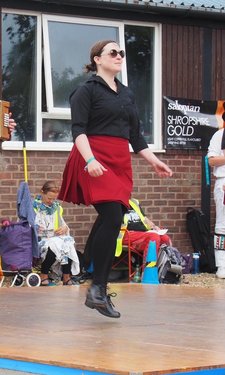
Fiona Bradshaw is a multifaceted step dancer and dance teacher, who currently performs with Gaorsach Rapper and Step. From a world-class Irish step dancer in her early career, Fiona found her forte in English clog, taking the world by storm as part of the BBC Radio 2 folk awards best live act The Demon Barber Roadshow.
A mother of two and doctor of archaeological science in ‘real life’ Fiona has always kept one ‘clog’ in the folk scene including a decade as a Dance Director for Shrewsbury Folk Festival, and her newest baby Family Folk Jam.
Fiona also dances American clog, French Canadian, and Cape Breton styles with her sister and original City Clicker, Sara Marshall-Rose, resurrecting some old Sister Act material for the soon to come Fanny and the Footflappers. Watch this space!
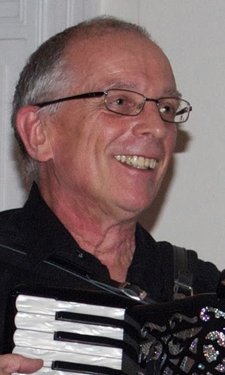
Jethro is well known as a musician for clog and step dancing; he has been playing for this stuff for about 45 years, originally with Greenwood Clog in Nottingham, with Beetlecrushers in Somerset, was a founding member of City Clickers, and was a musician for Instep in the years they were a performing team.
Twenty or so years ago he was inspired to take up Cape Breton/Scotttish step dance and has been lucky to be taught by Simon and Jo Harmer, Frank McConnell and Mats Melin from Scotland, and Mary Janet MacDonald and Harvey Beaton (amongst others) from Cape Breton.
Ruidhle an Eilien or Reel of the Island. The name of the dance references two islands: Uibhist a Deas (South Uist) in the Outer Hebrides from where many migrants left for Cape Breton Island, Nova Scotia.
This routine was devised by Mats Melin and Jethro learned it when it was first taught at Ceòlas (South Uist) in 2017. Mats intention was to devise a dance structured like a Hebridean step dance such as the First of August but using Cape Breton step motifs.
The dance has a six bar section with a two bar break/shuffle off/ending. The interesting thing is that the six-bar steps themselves are constructed of a 3-bar sequence which is then repeated but in a typically structured reel will articulate very differently with the music.
There are seven steps to learn and will be well within the grasp of anyone who has any exposure to Cape Breton steps - in particular their heel/toe shuffle.